What Is VFD? A Complete Guide to Variable Frequency Drives & How They Work
Introduction
A Variable Frequency Drive (VFD) is one of the most important components in modern industrial automation. It allows precise control of motor speed, improves energy efficiency, and reduces mechanical stress on equipment. In industries across Dubai and the UAE, VFDs are widely used in HVAC systems, pumps, fans, compressors, and industrial machinery.
This guide explains what a VFD is, how it works, and why it is essential for energy-efficient motor control.
What Is a VFD (Variable Frequency Drive)?
A VFD (Variable Frequency Drive) is an electronic device that controls the speed and torque of an electric motor by varying the frequency and voltage supplied to the motor.
Instead of operating at a fixed speed, the motor speed adjusts according to process demand.
What Does a VFD Do?
A VFD performs three main functions:
Controls motor speed
Reduces starting current
Optimizes energy consumption
This makes VFDs ideal for applications where load demand changes frequently.
How Does a Variable Frequency Drive Work?
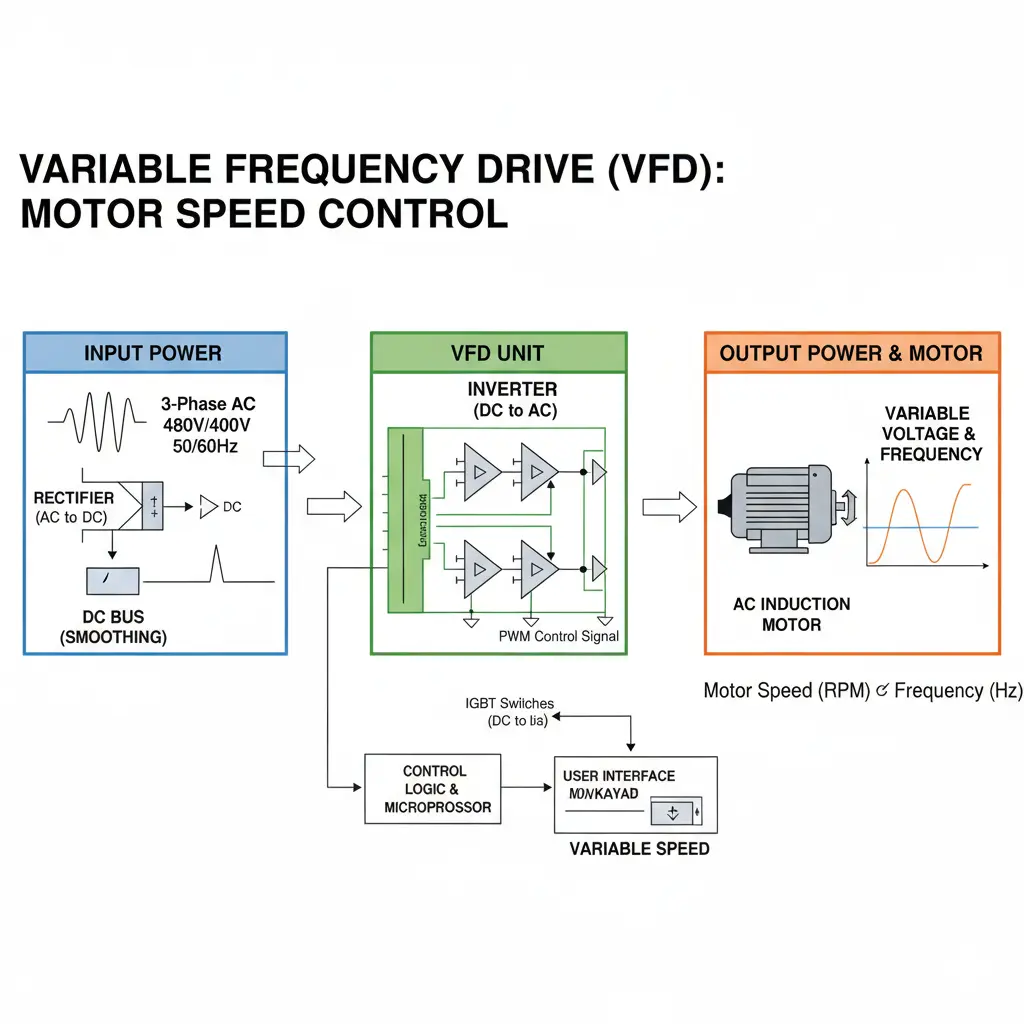
A VFD works in three stages:
Rectifier – Converts AC power to DC
DC Bus – Filters and smooths DC voltage
Inverter – Converts DC back to AC at variable frequency
By adjusting output frequency, the VFD controls motor speed accurately.
VFD Working Principle Explained
Motor speed depends on supply frequency. When frequency decreases → motor speed reduces. When frequency increases → motor speed increases.
This principle allows precise speed control without mechanical components.
Applications of VFD in Industry
VFDs are commonly used in:
HVAC systems
Water pumps & booster pumps
Fans and exhaust systems
Compressors
Conveyors
Industrial automation systems
Benefits of Using VFD
Benefit
Description
Energy Savings
Reduces power consumption
Soft Start
Eliminates high inrush current
Longer Motor Life
Reduces mechanical stress
Process Control
Accurate speed regulation
Lower Maintenance
Fewer mechanical failures
VFD vs Soft Starter – What’s the Difference?
Feature
VFD
Soft Starter
Speed Control
Yes
No
Energy Saving
High
Low
Torque Control
Yes
Limited
Cost
Higher
Lower
Conclusion
Understanding what a VFD is and how it works helps industries improve efficiency, reduce costs, and enhance equipment reliability. With rising energy costs and sustainability goals, VFDs have become essential for modern industrial systems in Dubai and across the UAE.
What Is a Variable Frequency Drive (VFD) and Why Dubai Industries Need It?
Introduction: Understanding What Is VFD in Modern Industrial Systems
In today’s rapidly evolving industrial landscape, one question is increasingly common: what is VFD and why is it essential for modern industries? In Dubai and across the UAE, industries are under constant pressure to improve energy efficiency, reduce operational costs, and adopt smart automation technologies. This is where the Variable Frequency Drive (VFD) plays a critical role.
From high-rise HVAC systems and water pumping stations to manufacturing plants and infrastructure projects, VFDs have become a core component of industrial automation strategies in Dubai.
This guide explains what is VFD, how it works, and why Dubai-based industries rely on it for reliable, efficient motor control.
What Is a Variable Frequency Drive (VFD)?
A Variable Frequency Drive (VFD) is an electronic device that controls the speed and torque of an electric motor by adjusting the frequency and voltage of the power supplied to the motor.
In simple terms, when someone asks what is VFD, the answer is:
A VFD allows a motor to run only at the speed required by the application, rather than operating at full speed all the time.
Unlike traditional direct-on-line motor starters, a VFD provides precise control over motor operation, resulting in improved efficiency and performance.
How Does a VFD Work?
To clearly understand what is VFD, it is important to know its working principle. A VFD operates through three main stages:
Rectifier Stage
The incoming AC power supply is converted into DC power using a rectifier circuit.
DC Bus
The converted DC power is filtered and stored to create a stable DC voltage.
Inverter Stage
The DC power is converted back into AC power with a variable frequency and voltage, which controls the motor speed.
💡 Pro Tip
Using a VFD significantly reduces motor starting current, protecting electrical components and extending motor lifespan.
Why Dubai Industries Need VFD Systems
Dubai’s industrial and commercial environment presents unique challenges that make VFDs a necessity rather than an option.
Energy Efficiency Regulations
Energy efficiency is a major focus in the UAE. VFDs help industries reduce power consumption by matching motor speed with actual load demand, leading to energy savings of up to 60% in certain applications.
Extreme Climate Conditions
High ambient temperatures place additional stress on motors and mechanical systems. VFDs provide smooth acceleration and controlled operation, reducing overheating and mechanical wear.
Smart Buildings and HVAC Demand
Dubai’s skyline is dominated by commercial towers, hotels, and shopping malls. HVAC systems in these buildings rely heavily on VFDs to control:
Chillers
Air handling units
Cooling towers
Automation and Process Control
As industries move toward Industry 4.0 and smart automation, VFDs enable precise speed control, improved process stability, and reduced downtime.
Common Applications of VFDs in UAE Industries
Industry Sector
Typical VFD Applications
HVAC Systems
Fans, pumps, chillers
Water & Wastewater
Pump flow and pressure control
Manufacturing
Conveyors, mixers, compressors
Oil & Gas
Controlled motor start and load management
Infrastructure
Elevators, escalators, tunnels
These applications clearly demonstrate what is VFD in real-world industrial use across Dubai and the UAE.
Key Benefits of Using a VFD
Reduced Energy Consumption
Motors operate only at required speeds, eliminating unnecessary power usage.
Extended Equipment Life
Soft starting and stopping reduce mechanical stress on motors and connected equipment.
Lower Maintenance Costs
Reduced wear and tear leads to fewer breakdowns and longer service intervals.
Improved Process Accuracy
Precise speed control improves product quality and system reliability.
💡 Pro Tip In pump and fan applications, even a small reduction in speed using a VFD can result in significant energy savings due to affinity laws.
Common Misconceptions About VFDs
Misconception: VFDs are only for large industries Reality: Small and medium-scale facilities also gain substantial benefits.
Misconception: VFD installation is complex Reality: With correct selection and commissioning, VFD integration is straightforward.
Misconception: VFDs damage motors Reality: Properly configured VFDs actually improve motor protection and lifespan.
Industrial VFD Solutions for Dubai-Based Businesses
Professional VFD implementation involves more than just installing a drive. It includes:
Correct VFD sizing
Panel design and integration
Installation and commissioning
Preventive maintenance support
A well-implemented VFD system ensures long-term energy efficiency, operational reliability, and compliance with UAE industrial standards.
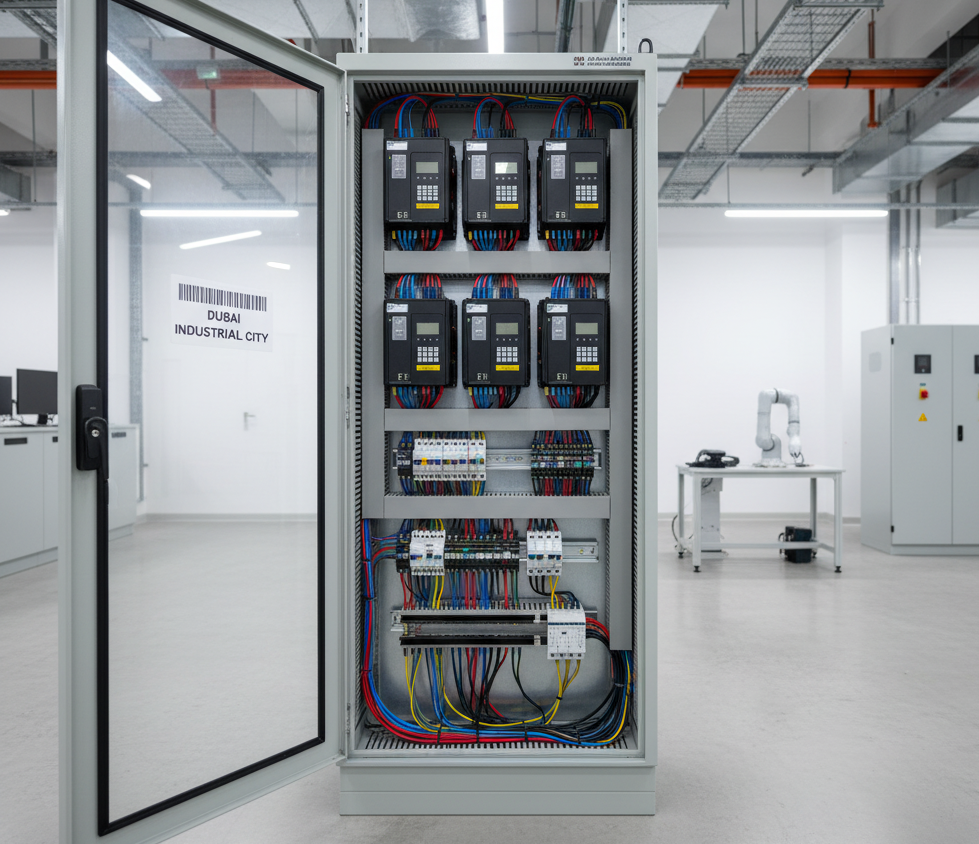
View our AC Variable Frequency Drives designed for precise motor speed control, energy savings, and demanding industrial environments in the UAE.
Conclusion: What Is VFD and Why It Is Essential for Dubai Industries
By now, it should be clear what is VFD and why it plays a vital role in modern industrial systems. For Dubai industries, VFDs are essential for achieving:
Energy efficiency
Reliable motor control
Reduced operational costs
Future-ready automation systems
In a competitive industrial environment like the UAE, adopting VFD technology is a strategic investment in efficiency and sustainability.